Japanese Counters (助数詞)
Unlike English, Japanese uses special words called counters when counting things. The counter you use depends on what is being counted. Different counters are used for people, animals, flat objects, long objects, books, machines, and many other categories.
For example:
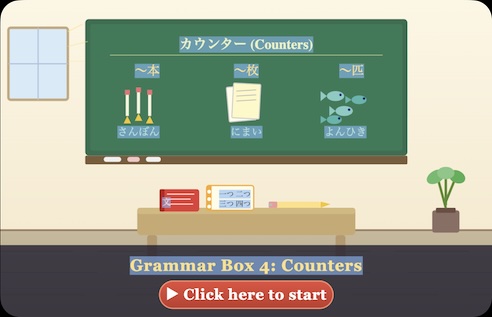
一本 (ippon) = one long object (e.g., an umbrella, pencil, or bottle)
三本 (sanbon) = three long objects (e.g., three umbrellas)
一枚 (ichimai) = one flat object (e.g., a sheet of paper)
二枚 (nimai) = two flat objects (e.g., two sheets of paper)
一人 (hitori) = one person
二人 (futari) = two people
三匹 (sanbiki) = three small animals (e.g., three cats)
Learning counters is an important part of mastering Japanese because they are used in everyday conversation. Use the exercise below to learn and practice some of the most common Japanese counters and become more comfortable counting different types of objects.